Reading tarot for yourself is how most people learn, and it is one of the most rewarding ways to use the cards. A personal reading can bring clarity during a busy week, perspective on a difficult decision or simply a quiet moment of reflection. Yet many readers find reading for themselves harder than reading for others. This guide explains why, and how to do it well.

Why self-readings can be tricky
- Bias: we see what we hope or fear to see.
- Emotional involvement: when we are anxious, difficult cards feel more frightening.
- Too much context: we know every detail, which can make us force cards to fit.
- Repetition: it is tempting to redraw until we get a comfortable answer.
How to stay objective
Read as if for a friend
Imagine the spread belongs to a friend in your situation. What would you tell them? This simple shift often removes bias.
Write before you interpret
Write the question and the cards before reading their meanings. Then note your first impression of each image. This captures your intuition before your hopes take over.
Use clear positions
Defined spread positions keep you honest. A card in the “challenge” position is a challenge, even if you like the card.
Set rules in advance
Decide whether you use reversals and clarifiers before you start, and never redraw because you dislike an answer.
Wait when emotions run high
If you are very upset, consider waiting. Readings done in a calmer state are usually clearer.
Creating a personal routine
A simple, repeatable routine helps you focus:
- Clear a small space and sit comfortably.
- Take three slow breaths.
- Write your question.
- Shuffle until it feels right.
- Lay out the cards and look at them as a whole.
- Interpret position by position, then summarise.
- Write one action or reflection.
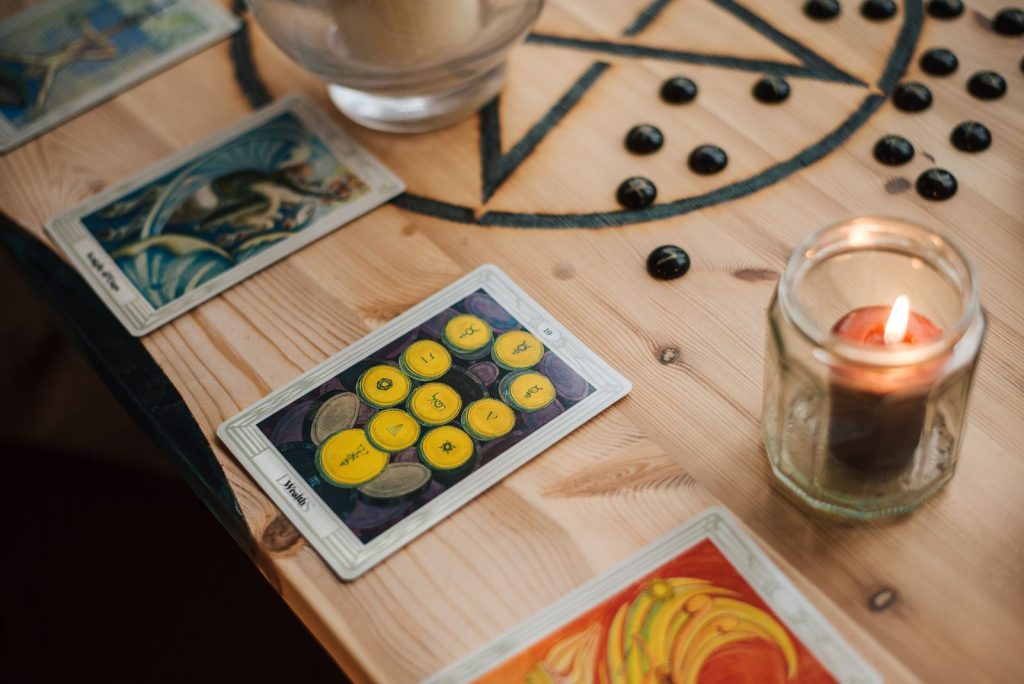
Some readers light a candle, play soft music or use a special cloth. These touches are optional, but they make the practice feel intentional.
Great questions for self-readings
- What do I need to know about myself right now?
- What is my main lesson this month?
- What am I avoiding?
- Where can I be kinder to myself?
- What will help me move forward with my goal?
- What do I need to release?
Spreads for self-reflection
- Daily card: one card for focus.
- Strength, weakness, lesson: a three-card personal growth spread.
- Weekly check-in: what to focus on, what to let go of, what will support me.
- Monthly review: what I achieved, what I learned, what to bring into next month.
See Tarot for Self-Reflection and Personal Growth for more.
When the cards say something you don’t want to hear
This happens to everyone. Before rejecting the message, ask: “Is there any truth in this?” Often the uncomfortable card is the most useful one. If it still does not fit, note it in your journal and revisit it in a week; meanings frequently become clear with time.
Combining self-readings with other tools
Self-readings work well alongside journaling, meditation, conversations with friends and, when needed, professional support. Tarot is a mirror; other tools help you act on what you see.
Keeping a journal
A journal is essential for self-readings. Record the date, question, cards, interpretation and later outcome. Over months, you will see patterns: recurring cards, themes and lessons. See How to Keep a Tarot Journal.
Using AI for a second opinion
If you feel too close to a situation, try entering your cards and question into an AI tarot reader for an outside perspective. Compare its interpretation with yours, and notice where your hopes or fears may have shaped your reading. See Using AI as a Tarot Study Partner.
How often to read for yourself
A daily card and a weekly or monthly spread is a healthy rhythm. Avoid reading on the same question repeatedly; give your choices time to play out.
A self-reading example
Question: “What do I need to know about my energy levels lately?” Three cards: the Ten of Wands, the Four of Swords and the Queen of Pentacles. Reading as if for a friend, the message is clear: you are carrying too many responsibilities, you need genuine rest rather than just a quick break, and the way forward is practical self-care, such as better meals, sleep and time at home. Written down, it becomes an action: say no to one new commitment this week and protect two evenings for rest. A simple self-reading has turned a vague feeling of tiredness into a concrete plan.
Reading for yourself during big life changes
During major transitions, such as a move, a new job, a breakup or a new baby, self-readings can be especially helpful, but they can also become a crutch. Use them to process feelings and clarify priorities, not to seek constant reassurance. A useful approach is a weekly three-card reading on “what I need to focus on”, plus a monthly bigger spread to review the overall journey. If you notice yourself drawing cards several times a day about the same worry, take a break and talk to someone you trust. Tarot works best as a calm, regular practice rather than an emergency service.
Signs your self-reading practice is healthy
- You feel calmer or clearer after most readings.
- You take practical actions based on insights.
- You accept difficult cards and reflect on them.
- You still make decisions with your own judgement.
- You enjoy the practice rather than feeling dependent on it.
Frequently asked questions
Is it bad luck to read for yourself?
No. This is a myth. Most readers read for themselves regularly and find it valuable.
Why do my self-readings feel unclear?
Strong emotions or vague questions are common causes. Try a clearer question and a calmer moment.
Can I read about the same question twice?
Wait until circumstances change, or ask a different angle of the question, such as what you can do rather than what will happen. Rereading your original notes is often more helpful than drawing new cards.