Tarot reading has fascinated people for centuries. A deck of 78 illustrated cards, shuffled and laid out in a pattern, somehow manages to spark insight, start honest conversations and help people look at their lives from a new angle. If you have ever wondered what actually happens in a tarot reading, or whether you could learn to read the cards yourself, this guide is the place to start.
What tarot is
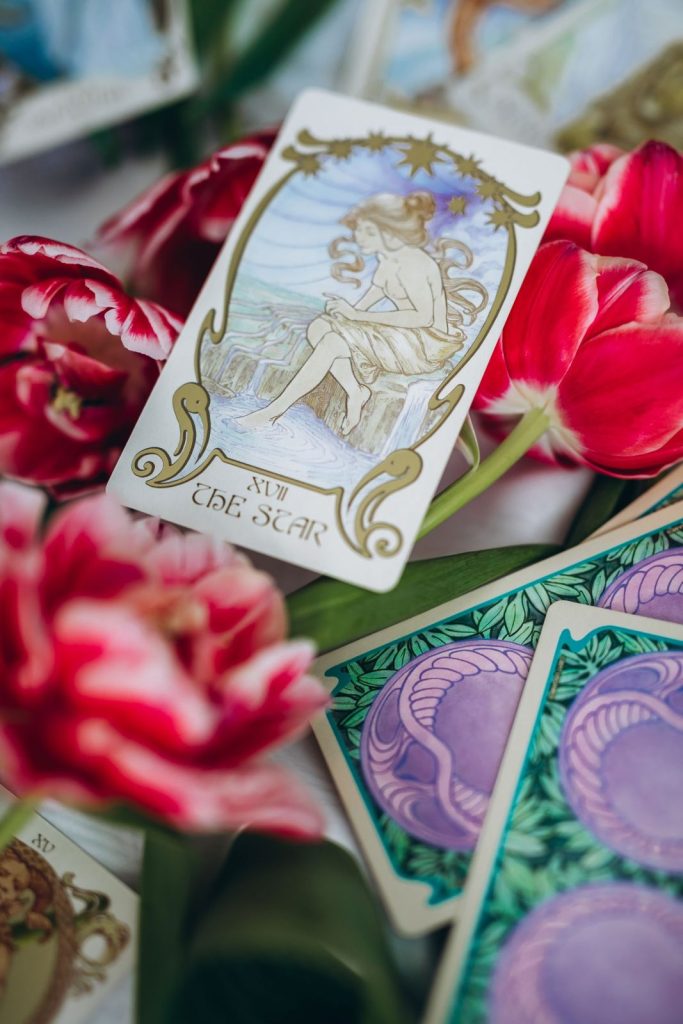
A tarot deck is a set of 78 cards divided into two parts. The Major Arcana contains 22 cards with names such as The Fool, The Lovers and The Star. These represent big life themes and turning points. The Minor Arcana contains 56 cards in four suits, Cups, Wands, Swords and Pentacles, which describe the everyday situations, feelings and choices that make up ordinary life.
Each card has traditional meanings, rich symbolism and an image designed to tell a small story. A reading combines several cards to describe a situation, the forces around it and possible ways forward.
What happens in a tarot reading
Most readings follow the same basic steps:
- A question or focus. The person asking, often called the querent, thinks about what they want to explore: a relationship, a career decision, a period of change.
- Shuffling. The cards are shuffled while the question is held in mind.
- A spread. Cards are drawn and placed in a layout called a spread. Each position has a meaning, such as “the situation”, “the challenge” or “advice”.
- Interpretation. The reader looks at each card’s meaning, its position, and how the cards relate to one another, then turns that into a story that answers the question.
- Reflection. The querent considers what resonates and what action, if any, they want to take.
What tarot can do for you
People use tarot in many different ways. Some see it as a spiritual or intuitive practice. Others see it as a structured way to think, where the cards act as prompts for reflection. Either way, common benefits include:
- Clarity: putting a messy situation into a clear picture with distinct parts.
- New perspectives: a card can highlight something you were avoiding or had not considered.
- Self-reflection: readings invite you to ask what you really want and why.
- Conversation: reading for friends opens honest discussions about hopes and worries.
- Creativity: writers and artists use tarot imagery for story ideas and inspiration.
What tarot is not
Responsible readers are clear about the limits. Tarot is not a replacement for medical, legal, financial or psychological advice. It does not fix the future in stone; most readers describe it as showing likely directions based on the present, which you can change through your choices. If a reading touches on health, money or safety, the wise next step is to talk to a qualified professional.
Do you need special powers?
No. Anyone can learn to read tarot. Reading well depends on three learnable skills: knowing the traditional card meanings, understanding how spreads work, and practising your ability to connect the cards into a meaningful story. Intuition grows with practice, just like any other skill. Many excellent readers started by looking up every single card in a guidebook.
Popular ways to get a reading
Reading for yourself
Buying a deck and learning to read for yourself is the most common path. A simple daily draw of one card is a great way to start learning meanings in the context of real life. See One-Card Tarot Reading.
A reading from another person
Professional readers offer readings in person, by phone or online. A good reader listens, explains the cards clearly and leaves decisions to you.
Online and AI tarot
Online tools draw cards digitally and provide interpretations, and AI tarot readers can now respond to your specific question in conversation. They are convenient and private, and they can be excellent learning aids. Read What Is AI Tarot Card Reading? to learn more.
How to start learning
- Choose a deck you like looking at. The Rider-Waite-Smith style is the easiest to learn because most guides use its imagery. See How to Choose Your First Tarot Deck.
- Learn the structure: the Major Arcana and the four suits. Read The 78 Tarot Cards Explained.
- Start small: one-card and three-card readings teach you more than complex spreads at first.
- Keep a journal of your draws and what happened; patterns appear quickly.
- Practise often, and be patient with yourself.
A simple first reading
Try this today. Shuffle your deck while asking, “What do I most need to focus on this week?” Draw three cards and place them left to right: the first represents what is helping you, the second what is challenging you, and the third a piece of advice. Look at the images before reading any meanings. What do you notice first? Then look up each card and see how the traditional meaning fits your week. Write down your thoughts. You have just done your first tarot reading.
Approaching tarot with an open, grounded mind
The most rewarding way to approach tarot is with curiosity and common sense. Let the cards prompt reflection, but stay the author of your own decisions. Notice what resonates, question what does not, and remember that the most useful insight often comes from how you respond to a card rather than the card itself.
Setting the mood
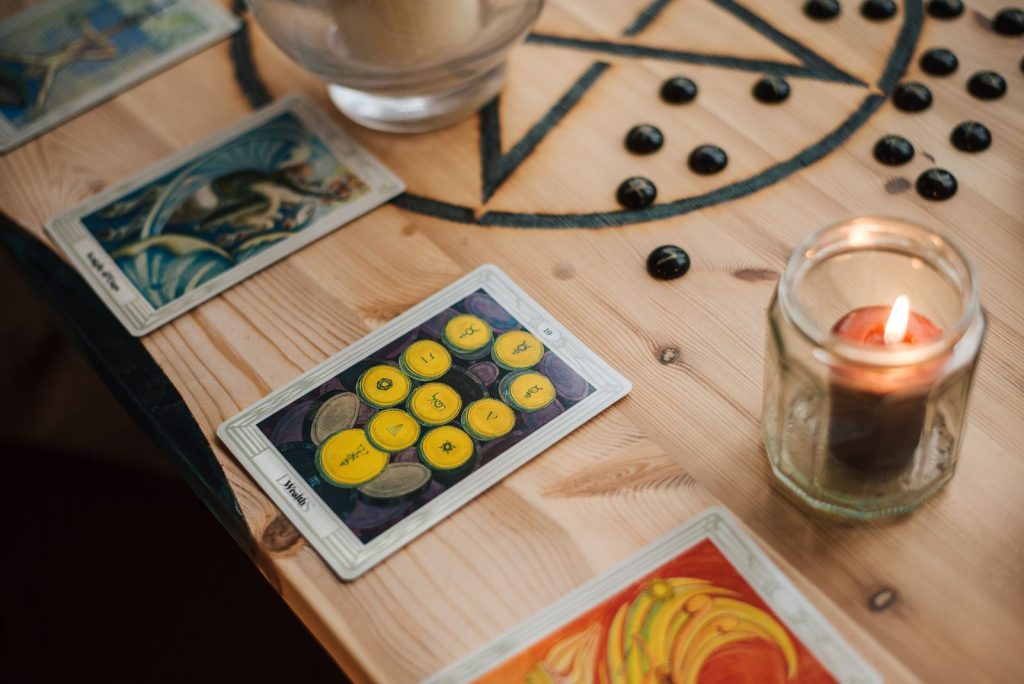
Many readers like to create a calm moment before a reading: a tidy table, soft light, a few deep breaths. None of this is required, but slowing down helps you focus on the question and notice details in the cards. Even a quiet five minutes with a cup of tea can turn a quick draw into a thoughtful reflection.
Frequently asked questions
Can tarot predict the future?
Many readers see tarot as describing current energies and likely outcomes rather than fixed events. Your choices still shape what happens.
Is it bad luck to buy your own deck?
No. This is a popular myth. Most readers buy their own decks.
How long does it take to learn tarot?
You can do simple readings in your first week. Reading fluently with all 78 cards usually takes a few months of regular practice.