Watching an experienced tarot reader can feel like magic. They lay out a handful of cards, pause for a moment, and then describe a situation in surprising detail. But behind that fluency is a clear process that anyone can learn. This article breaks down how tarot card reading actually works, step by step.
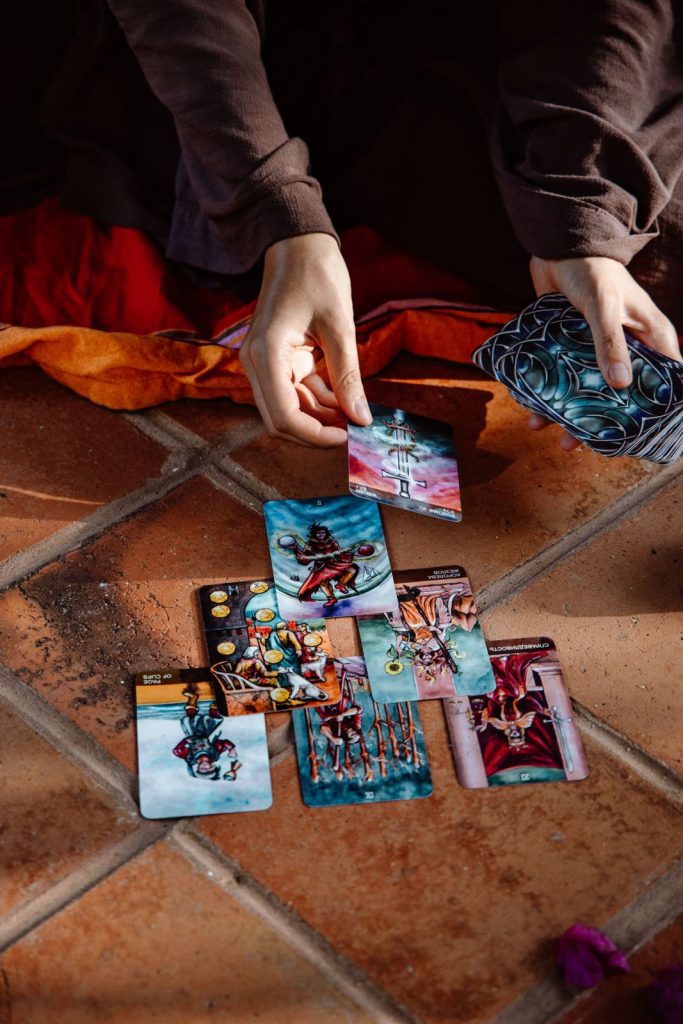
The three layers of meaning
Every interpretation draws on three layers at the same time:
- The card itself: its traditional meaning, number, suit and imagery.
- The position: what that place in the spread represents.
- The context: the question asked and the other cards around it.
The Three of Swords, a card of heartache, means something different in the “past” position of a love reading than in the “advice” position of a career reading. Learning to combine these layers is the heart of tarot.
Layer 1: card meanings
Each card carries traditional keywords. The Sun suggests joy and success, the Five of Pentacles hardship and feeling left out in the cold, the Knight of Wands bold action. You do not need to memorise long lists; start with two or three keywords per card and expand over time.
Structure helps. The Major Arcana deals with big themes and life lessons. In the Minor Arcana, each suit has an element and an area of life:
- Cups (water): emotions, relationships, intuition.
- Wands (fire): energy, ambition, creativity, passion.
- Swords (air): thoughts, communication, conflict, truth.
- Pentacles (earth): money, work, health, the material world.
Numbers add another layer: aces are beginnings, fives are challenges, tens are completion. With suit and number alone, you can make a good first guess at almost any Minor Arcana card. See Tarot Numerology.
Layer 2: positions in a spread
A spread is a layout where each position asks a question. In a simple three-card spread, positions might be past, present and future, or situation, obstacle and advice. Positions focus the meaning of each card. Without them, a reading would be a pile of general messages; with them, it becomes an answer. Our guide to three-card spreads gives several layouts to try.
Layer 3: context and relationships
Cards influence each other. Some patterns readers look for:
- Many Major Arcana cards: the situation is significant, a turning point.
- Many cards of one suit: the reading centres on that area of life, for example lots of Cups for emotions.
- Repeated numbers: several threes suggest growth and collaboration; several fives suggest conflict.
- Court cards: often represent people involved, or aspects of your own personality.
- Direction of gaze: figures looking towards or away from other cards can suggest connection or turning away.
See Tarot Card Combinations for more.
Where intuition comes in
Intuition in tarot is not mysterious. It is the ability to notice what stands out to you in an image, how a card makes you feel, and what connections your mind makes between the cards and the question. A detail you might ignore, a dark sky, a figure turning away, a single bright flower, can become the key to a reading. Experienced readers balance traditional meanings with these personal impressions. Beginners can start by asking: “What is the first thing I notice in this card?”
Building the interpretation
Here is a practical method for any reading:
- Look at the whole spread first. Note colours, suits, Major Arcana, and general mood.
- Read each card in its position, using one or two keywords.
- Connect the cards into a story: how does the first lead to the second? What does the advice card suggest about the challenge?
- Return to the question. Summarise the answer in a sentence or two.
- Turn it into something useful: a reflection, a decision, a next step.
An example reading
Question: “How can I improve things at work?” Three cards: situation, obstacle, advice.
- Situation, Eight of Pentacles: you are working hard and building skills, focused on detail.
- Obstacle, Four of Swords: exhaustion; you need rest but are not taking it.
- Advice, Page of Cups: bring curiosity and enjoyment back; try something creative or new.
Story: your dedication is real, but you are running on empty. Improvement will not come from working harder; it will come from rest and rediscovering what you enjoy about your work, perhaps through a new project or approach. That is a useful, actionable answer built from three cards.
Reversed cards
When a card appears upside down, many readers interpret it differently: blocked, delayed, internal or excessive versions of the upright meaning. Others ignore reversals and read every card upright. Both approaches work. See Reversed Tarot Cards to decide which suits you.
Why it feels accurate
Tarot images are rich and open to interpretation, so they connect easily with real situations. Whether you see that as intuition, synchronicity or simply a powerful reflective tool, the practical value is the same: the cards help you look at your situation from angles you might not choose on your own.
Practising the process
The fastest way to internalise this method is repetition with feedback. Do one small reading a day, write down your interpretation, and look back a week later. You will see which interpretations proved useful, which cards you misread and where your intuition was right. Over a few months, the three layers stop feeling like separate steps and start working together automatically.
Common sticking points
Beginners often freeze when a card seems not to fit. When that happens, read the card’s keywords again and ask how they could apply in a smaller or more personal way. If it still does not click, note it and move on; the meaning often becomes clear later in the reading or days afterwards.
Frequently asked questions
Do I need to memorise all 78 meanings?
Not at first. Learn the structure, suits and numbers, and look up details as you go.
Can two readers interpret the same cards differently?
Yes. Interpretation involves judgement and intuition, so readings vary, though core meanings stay consistent.
Is a bigger spread more accurate?
Not necessarily. Small spreads are often clearer, especially for specific questions.